Behind the design · 10 May 2026
How the atmosphere of an event is designed
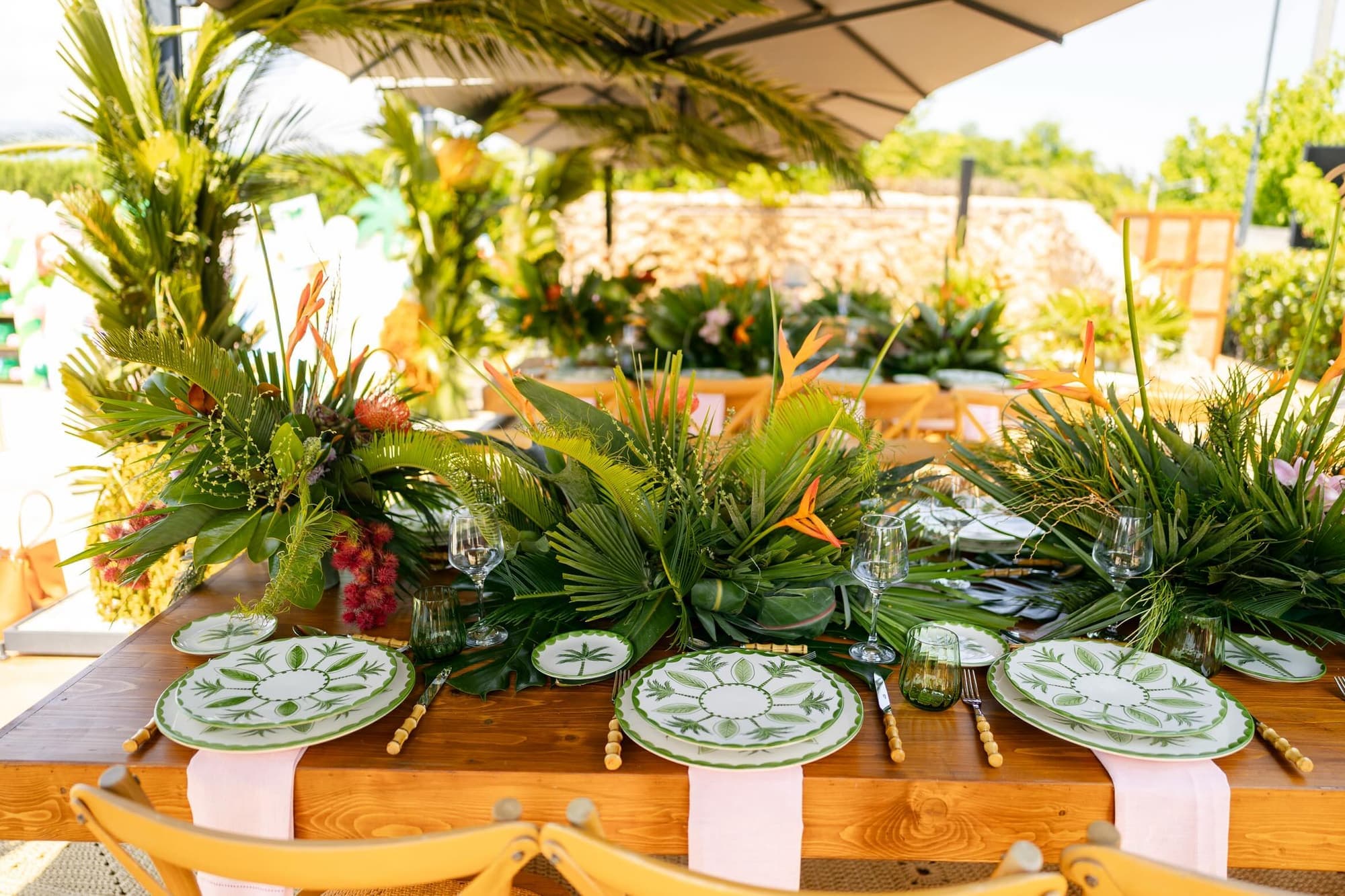
Most people ask us for beautiful flowers. Almost nobody asks for atmosphere — yet that is what guests still remember six months later.
The difference is not in the blooms. It is in four decisions taken before the first stem is cut.
Height decides whether people talk to each other
It is the most practical and most neglected decision. A tall arrangement in the centre of a round table cuts the table in half: the guests opposite cannot see one another for four hours.
The rule we keep: either below 30cm or above 70cm — so the eye passes either over it or under it. Never in between.
On long tables the opposite applies. There a low, continuous run works better than separate vessels, because it unifies the table instead of fragmenting it.
Light does half the work
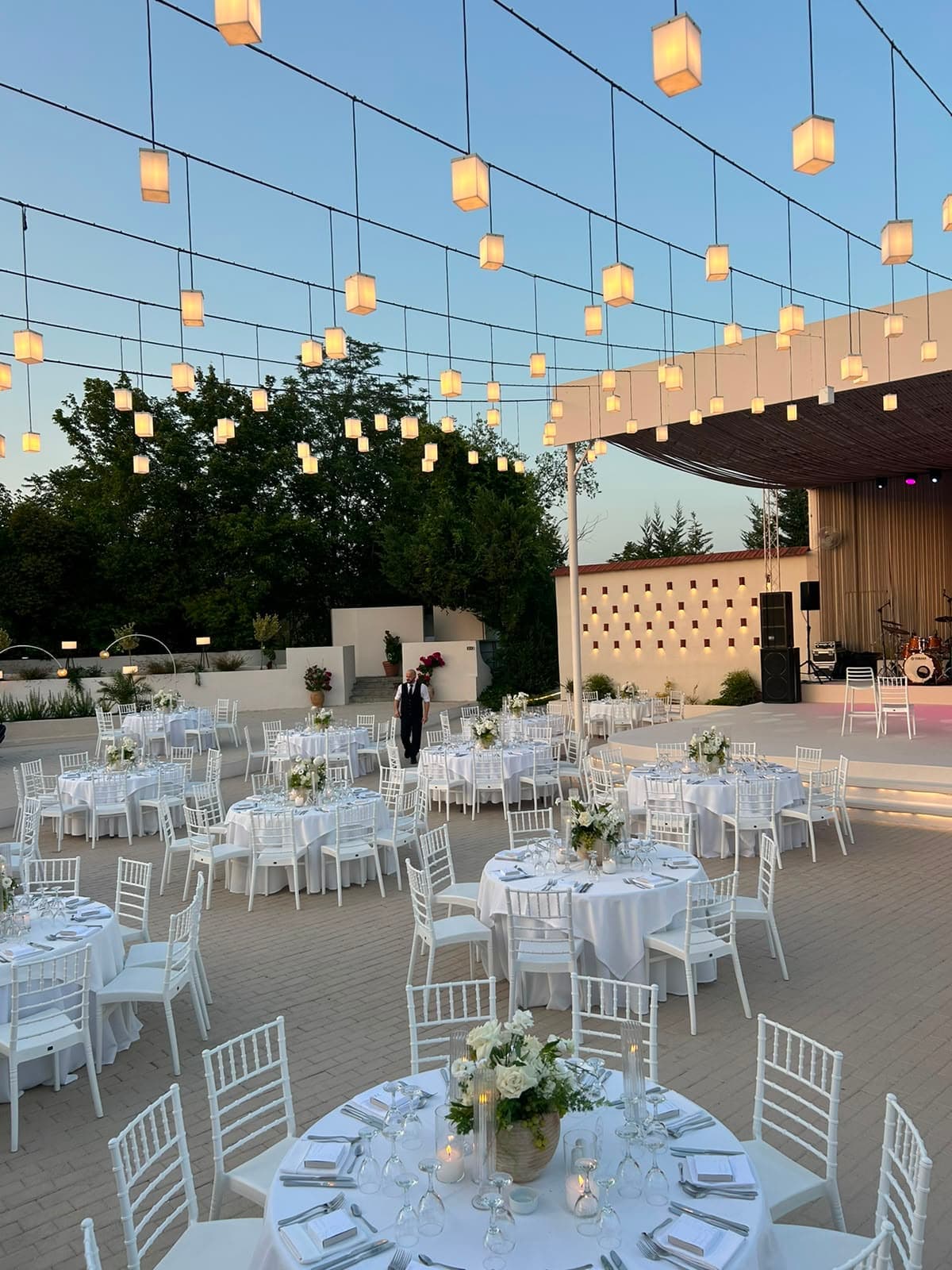
A scheme that looks wonderful at six in the evening can disappear by ten at night. Before designing, we always ask what time the event begins and how the space is lit after sunset.
Under cool lighting, warm pinks and corals go grey. Under very warm light, white turns yellow. And in a room lit only by candles, dark tones vanish entirely — there we work with whites and pale greens that catch the flame.
One candle beside an arrangement is worth more than ten extra stems inside it.
Scale should follow the room, not the budget
In a space with high ceilings, ten discreet arrangements are simply lost. One large suspended piece achieves more for less money, because it occupies the empty air that otherwise stays empty.
The reverse is equally true: in a low or small room a large installation smothers everything. There, repetition works — the same small element, many times over, creates rhythm.
The guest's journey
Think of the evening as a route: entrance, welcome drinks, seating, table, dance floor. Each point needs a different intensity.
The entrance must declare the tone immediately — it is the one place where excess is justified. The table wants the opposite: enough to be beautiful, not so much that it obstructs. And the dance floor needs almost nothing, because by then everyone is looking at each other.
What helps us begin
When you come for a first conversation, the most useful things to bring are not photographs of flowers:
- photographs of the venue, at the hour your event will take place
- the guest count and the table layout
- what you want guests to feel — one word is enough
That is where we start. The flowers are the last decision, not the first.